Chaipovឆៃប៉ូវ
Preserved Radish · sweet · salty · crunchy · concentrated
How it’s madeរបៀបធ្វើ
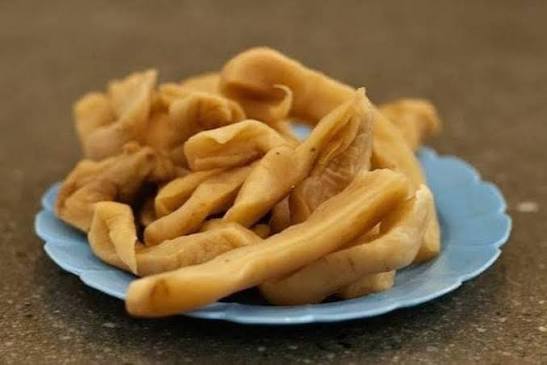
Fresh white radish is washed, trimmed, and cut into thick strips, then heavily salted and left to draw out its water for a day or more. The salted radish is weighted down and pressed to squeeze out the remaining liquid, then spread out to dry in the sun until it is limp but still pliable. Many families then cure the dried strips in a sweet-savory brine of sugar, salt, and sometimes soy or fish sauce, letting them soak for several days until they take on an amber colour and a chewy bite. Packed tightly into jars, chaipov keeps for months; before use it is rinsed, sometimes soaked to soften, and chopped. Salt does the preserving first, and the sweet cure comes after to concentrate and round off the edge.
What it’s used forការប្រើប្រាស់
Chopped fine, chaipov is stirred into egg omelettes and steamed egg dishes for a salty-sweet bite. It is fried with garlic as a side dish, added to stir-fried vegetables, pork, and noodles, and spooned over rice porridge (borbor) or plain rice. It also goes into savory-sweet braises and is set out as a condiment beside grilled meats.
Regional variationភាពខុសគ្នាតាមតំបន់
The balance of sugar to salt is the biggest variable — some families make a distinctly sweet, syrupy chaipov, others a saltier, drier one. The cut differs as well: fine shreds dry quickly and stay crisp, while thick strips stay meatier and chewier. Drying time is set by the weather and by how firm the cook wants the final texture, and some households skip the sweet cure entirely and simply salt and sun-dry the radish. Market stall to market stall, the same range shows up, so no two jars taste quite alike.