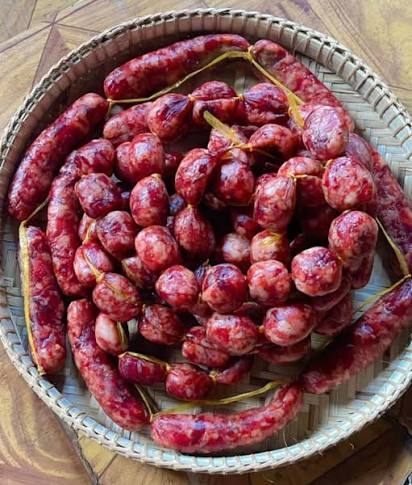
Kwa Koខ្វាគោ
Fermented Beef Sausage · savory · slightly sour · aromatic · smoky
How it’s madeរបៀបធ្វើ
Beef is minced or pounded, then mixed with salt, sugar, garlic, and often cooked rice or a little rice powder, which feeds the fermentation and helps the sausage set. Some families season the mixture further with black pepper, chili, or galangal. The mixture is packed into natural casings and tied into short links, then left to ferment at room temperature for a day or two. The links are afterwards hung or laid out to dry and firm up — sometimes in the sun, sometimes over a light smoke — until they turn deep red and dense. Stored cool or in a jar they keep for weeks, and before eating they are grilled, fried, or steamed and sliced.
What it’s used forការប្រើប្រាស់
Kwa ko is grilled or pan-fried and sliced into rounds, eaten with rice as a main or a side dish. It is a popular snack with beer and a common picnic and travel food, because it keeps without refrigeration. Sliced, it goes into fried rice, stir-fries, and noodle dishes, and it is usually set out with fresh vegetables, herbs, and a chili-lime or prahok dip.
Regional variationភាពខុសគ្នាតាមតំបន់
Seasoning is where households diverge: some keep kwa ko simply salty and garlicky, others push the sugar for a sweeter, stickier link or add pepper, chili, and galangal for heat and aroma. How long the mixture ferments before drying decides the sourness, and how finely the beef is minced and how long it dries decides the texture — soft and juicy links or hard and chewy ones. Some cooks smoke the links lightly, others dry them in the sun, and the fat-to-lean ratio of the beef moves the finished sausage from dry and firm to rich and tender.