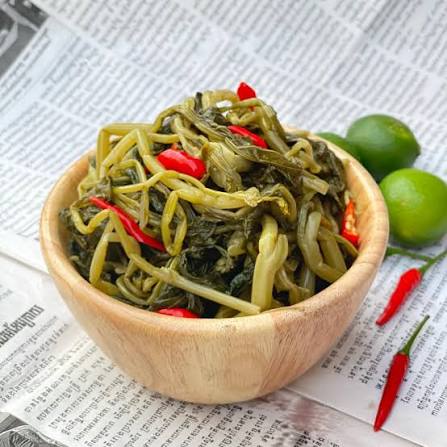
Spey Jrukស្ពៃជ្រក់
Fermented Mustard Greens · sour · salty · crisp · fermented
How it’s madeរបៀបធ្វើ
Mustard greens are washed, then withered in the sun or air-dried for a few hours until the leaves soften and lose some of their moisture. They are layered with salt — and often a little sugar and a spoonful of cooked rice or rice water to feed the fermentation — then packed tightly into a jar or clay crock and weighted so the greens stay under their own brine. The jar is left at room temperature for several days to a few weeks, until the greens turn sour, olive-green, and pleasantly crisp. Kept cool, spey jruk lasts for months; before eating it is rinsed, squeezed, and chopped to taste.
What it’s used forការប្រើប្រាស់
Spey jruk is served as a sour side dish next to grilled meats, fish, and rich stews, cutting through the fat. It is stir-fried with pork, beef, or eggs, dropped into soups for a tangy lift, and eaten straight with rice and a dip of prahok or chili. Chopped, it goes into omelettes and fried rice, and it is a common accompaniment to rice porridge (borbor).
Regional variationភាពខុសគ្នាតាមតំបន់
Fermentation time is the main variable — a few days gives a mild, crunchy pickle, while several weeks makes it deeply sour and soft. Some families steer the sourness with garlic, chili, palm sugar, or a splash of rice water; others salt the greens heavily and leave the sugar out. The greens themselves change with the season and with the market, and some cooks press the pickle hard while others leave it loose in the jar. Each batch carries the taste of the kitchen that started it.