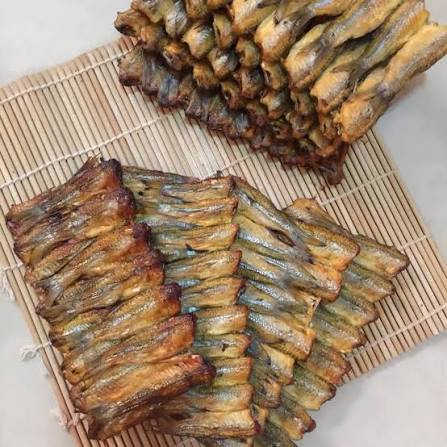
Trey Chaarត្រីឆ្អើរ
Smoked Fish · smoky · savory · salty · firm
How it’s madeរបៀបធ្វើ
Freshwater fish — snakehead, catfish, and other river fish — are cleaned and gutted, sometimes split open and sometimes left whole, then rubbed inside and out with salt and left to sit for an hour or overnight. They are hung from bamboo rails or laid on a rack over a slow, smoldering fire of wood, coconut husk, or rice husk, kept low and smoky so the fish cures and dries rather than grills. After a few hours to a day the flesh firms up and the skin darkens to amber-brown. The fish is then rested, cooled, and stored hanging in a dry, airy place or in a jar, where the salt and smoke keep it for weeks.
What it’s used forការប្រើប្រាស់
Trey chaar is usually grilled or fried to re-crisp the skin, then eaten with rice as a main or a side dish with fresh vegetables and a chili or prahok dip. It is flaked into fried rice, added to soups and curries for smoky depth, and crumbled into salads. Small smoked fish are pounded with chili, garlic, and lime into a smoky relish, and the fish is also eaten on its own as a snack.
Regional variationភាពខុសគ្នាតាមតំបន់
Families differ on how much salt goes into the rub and how long the fish rests before it meets the fire. The smoke itself changes with the fuel — coconut husk gives a sweet, dark smoke, rice husk a gentler one, and hardwood something sharper — so no two batches taste the same. Some cooks smoke lightly for a moist, tender fish, others hard and long for a dry one that keeps. The species is whatever the catch provides, and the size of the fish sets the timing.